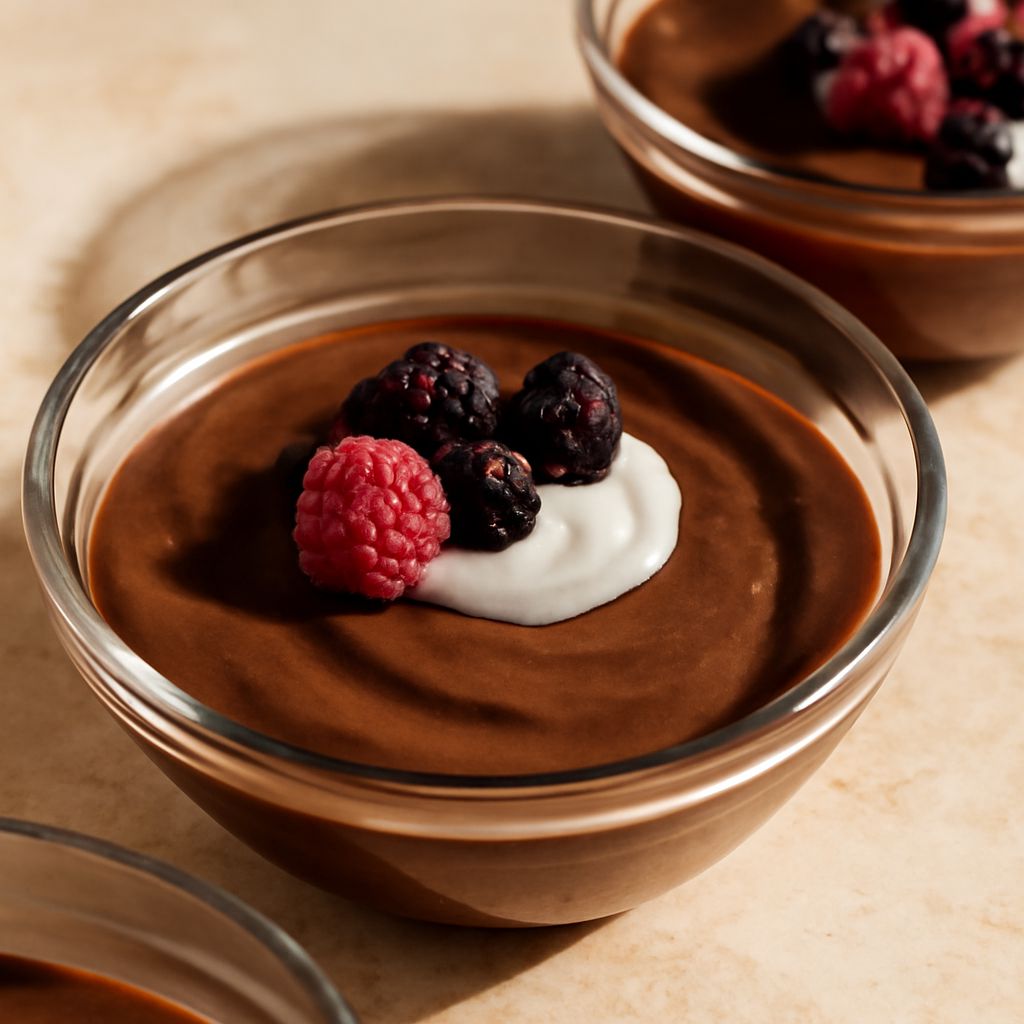
You have the vanilla and the plant milk, but the cornstarch box is empty. Happily, homemade vanilla pudding can be made without cornstarch: arrowroot starch gives the milk enough body to turn into a spoonable dessert. This plant-based vanilla pudding recipe skips cornstarch, eggs and dairy. Keep the heat gentle, watch the texture, and give the pudding time to cool.
Vanilla pudding recipe without cornstarch
This makes about 2 cups, or four small servings. Allow about 5 minutes to mix, 8 to 12 minutes to cook, and at least 2 hours to chill. Cooking time varies with the pan and stove; the texture is your best guide.
Ingredients
- 2 cups unsweetened plain soy milk, divided
- 2 tablespoons plus 2 teaspoons arrowroot starch
- 1/4 cup vegan granulated sugar
- 1/8 teaspoon salt
- 1 teaspoon vanilla extract
- 1 tablespoon vegan butter, optional
Choose arrowroot starch, sometimes labeled arrowroot powder, rather than a blend containing cornstarch. Use sugar and vanilla that meet your vegan preferences; some refined sugars may be processed with animal-derived bone char. Soy milk gives this pudding a creamy base. An unsweetened oat milk can also work, though brands vary in thickness and flavor.
Method
- Mix the dry ingredients. In a medium saucepan, whisk the arrowroot, sugar and salt together. Breaking up the powder now helps prevent little starch pockets later.
- Make a smooth mixture. Pour in about 1/2 cup of the cold soy milk a little at a time, whisking until no dry streaks remain. Whisk in the remaining milk. At this stage it should look thin and evenly mixed, like sweetened milk.
- Warm gently. Set the pan over medium-low heat. Whisk often, reaching the bottom and corners. After several minutes, the mixture will begin to thicken. As soon as you notice resistance under the whisk, stir constantly.
- Watch for the cue. When the pudding coats the back of a spoon and a finger drawn through the coating leaves a clear line, remove the pan from the heat. It should be pourable but visibly thicker than the milk you started with. Avoid a vigorous boil or prolonged cooking; arrowroot can lose thickness with extended high heat.
- Finish and portion. Whisk in the vanilla and optional vegan butter. If you see lumps, pour the warm pudding through a fine-mesh strainer into a bowl. Divide among four small dishes or leave it in one serving bowl.
- Cool and chill. Let it cool briefly, then cover and refrigerate until cold, at least 2 hours. Press parchment or food-safe wrap directly onto the surface if you prefer no skin. The pudding will firm further as it chills.
This homemade pudding without cornstarch is soft and spoonable rather than a firm slice. Stirring after chilling loosens it a little. For a celebration, pour it into small glasses before chilling so each guest gets a tidy serving.
Why arrowroot works
Arrowroot is a starch: as it heats in liquid, it absorbs water and thickens the mixture. Starting with cold milk helps disperse it before heat can form lumps. The change happens near the end of cooking, so patience and a whisk are more useful than a high flame.
The texture can be slightly different from a cornstarch pudding. It may look glossy and feel a little more delicate. That’s normal. Don’t keep boiling it in search of a firmer result; cool it first and judge it after chilling. If you are making vanilla pudding without cornstarch for the first time, a small batch gives you a useful feel for the timing on your stove.
Make it fit the occasion
Serve the pudding cold with berries, sliced banana or toasted coconut. A little grated dark chocolate adds contrast, but check its ingredient list for milk if the dessert needs to be vegan. For a layered cup, alternate pudding with fruit and vegan cookie crumbs just before serving. Cookies can soften as they sit, so add the final crunchy layer at the last minute.
For a wedding shower or dinner party, prepare individual cups ahead and cover them in the refrigerator. Label them if your gathering includes allergies: this version contains soy, and toppings may introduce nuts or wheat. Choose a different tested plant milk if needed, and check every ingredient and topping against your guests’ requirements.
The pudding is also pleasant warm, when its texture is looser. Spoon it over baked fruit or serve a small bowl straight from the pan after it has cooled enough to eat. Chilling is the better choice when you want it to hold its shape in a glass.
Storage and small adjustments
Cover leftovers and refrigerate promptly. Use clean utensils when serving and enjoy within 3 days. For a party, keep the cups chilled until serving; do not leave them at room temperature for more than two hours, or one hour if the temperature is above 90°F. If the pudding develops an unusual smell or appearance, discard it.
If your plant milk is already sweetened, taste the warm mixture before adding vanilla and adjust the sugar next time. The amount of sugar in this recipe is a starting point for unsweetened milk. Likewise, vegan butter is optional: it adds richness, but the arrowroot does the thickening.
For a vanilla pudding recipe without cornstarch, avoid swapping in a different starch by the same measurement without checking its directions. Flour, tapioca and other thickeners can behave differently. This plant-based recipe is designed around arrowroot and gentle heat.
If the pudding is still thin after chilling, the arrowroot may not have heated enough to thicken. Return it to the saucepan and warm gently while whisking until it coats a spoon, then cool and chill again. If it has already boiled for a long time, prolonged heat may have weakened the starch; a fresh batch with gentler heating is the more reliable fix.