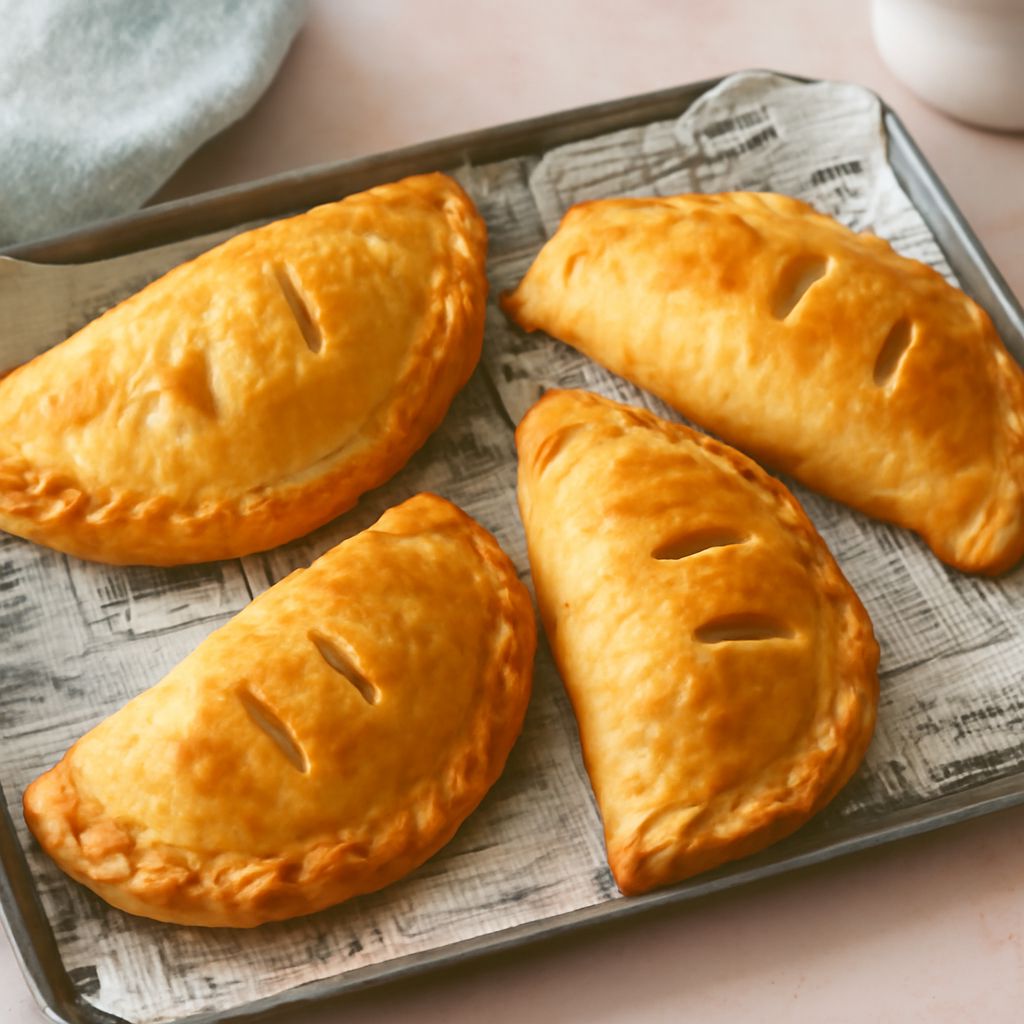
Choose a Cornish-style pasty when you want a portable, filling lunch with a sturdy crust and a savory center. These baked pastry parcels are food you can serve at a relaxed gathering as readily as you can pack them for lunch. Their familiar half-moon shape keeps the filling enclosed, while a raised seam along one side gives you a useful clue to their Cornish roots.
Pasties food guide: What is inside?
What is a pasty? It is a filled pastry, folded over and sealed before baking. A Cornish pasty is a particular savory version associated with Cornwall, in southwest England. Its traditional filling combines beef, potato, onion, and swede, a root vegetable usually called rutabaga in the United States. Salt and pepper season the mixture, which cooks inside the pastry.
The crust is golden and substantial enough to hold the contents together. Cut it open and you find tender pieces of meat and vegetables, rather than a smooth filling or a sweet center. The individual pieces give each bite a little texture. The filling and crust make a complete, satisfying meal, though a simple salad on the side can brighten the plate.
A pasty is not defined only by its filling. The shape and seal matter too. The pastry is folded into a D shape and crimped along one side: crimping means pinching and folding the joined edges into a raised, ridged seam. That seam closes the parcel and makes the finished shape easy to recognize.
The Cornish tradition and its ingredients
The UK government’s product specification describes a savory D-shaped pastry with beef, potato, swede, onion, and seasoning. It allows shortcrust, rough puff, or puff pastry, provided the casing holds its shape. The ingredients go into the pastry uncooked and cook together as it bakes. Under the UK protected geographical indication, the named product must be prepared in Cornwall and meet the specification. That protection is a UK labeling rule; the practical details also explain what distinguishes the traditional dish.
Rutabaga has a gentle, earthy sweetness that balances the beef and onion. Potato makes the filling substantial, while onion softens during baking and adds a savory note. The pastry provides a crisp outer layer and protects the filling from drying too quickly. If you encounter a different vegetable or a meat-free version, it can still be a delicious filled pastry, but it differs from the traditional composition described in the specification.
A British pasty may take many forms, and Cornish savory pasties are one regional tradition within that larger family. Another baker might use a different shape, filling, or seam. A top seam alone, for example, does not create the side-crimped form of traditional Cornish pastries.
Why the shape traveled well
The pasty’s appeal is easy to understand: pastry surrounds a meal that can be carried without a plate. The association’s history of the dish connects the dish especially with the mining communities of 19th-century Cornwall, where workers took pasties underground as a meal. The association also notes earlier histories of filled pastry in Cornwall, so the mining connection is one chapter in a longer story.
A popular account says miners held the thick crimp and discarded it to avoid contaminating the rest with dirty hands. The association notes that this explanation is disputed and that some accounts describe pasties wrapped in paper or cloth. The seam’s practical role as a seal is clear; its precise role at every miner’s lunch is harder to establish.
With pasties food vendors can offer a substantial hand-held meal. For a party, that same enclosed filling makes serving straightforward. Guests need napkins, but they do not need a fork for every bite once the pastry has cooled enough to handle.
Savory lunch or sweet pastry?
What is a pastie suited to: lunch or dessert? The version described here is savory, with beef and vegetables enclosed in pastry. Its golden crust may resemble that of a turnover, but the filling belongs at the lunch table. Other filled pastries can be sweet or savory, so checking the menu or label is more useful than judging by shape alone.
For lunch, serve one warm with a sharp green salad, sliced tomatoes, or a little pickle. A bright accompaniment cuts through the pastry’s richness without competing with the filling. If the portion is large, half a pasty and a side can make a comfortable meal; if it is small, a whole one may suit a guest better.
At a casual celebration, smaller parcels are easier to arrange on platters. Offer a clear label for each filling and keep vegetarian or vegan selections separate from meat versions. Provide small plates and napkins, and allow guests to discover the filling without a shower of hot pastry crumbs. The seam helps contain the contents, but biting into a freshly heated center still calls for a little patience.
Choosing a plant-based alternative
For a vegan table, a pasty inspired by the Cornish style can use potato, rutabaga, onion, and a plant-based protein such as lentils or mushrooms. Check the pastry as well as the filling: butter, lard, milk, and egg may appear in dough or glaze. Ask the baker about ingredients and preparation if guests avoid animal products.
That adaptation is separate from the classic beef-filled version. A baker might describe it as a vegetable or vegan pasty with Cornish-inspired seasoning and a side crimp; the label should make the difference clear. For a mixed group, separate serving utensils and clearly marked platters help guests choose confidently.
If buying ahead, ask how the pastries should be stored and reheated, and follow the maker’s instructions. For homemade or catered meat fillings, keep perishable food chilled until heating and refrigerate it within two hours of serving, or one hour above 90°F. A hot center and an intact crust make the best presentation, whether the meal is for a lunch break or a celebration.
Choose the traditional beef-and-vegetable parcel when you want the Cornish classic; choose a clearly labeled plant-based version when the guests or occasion call for it.