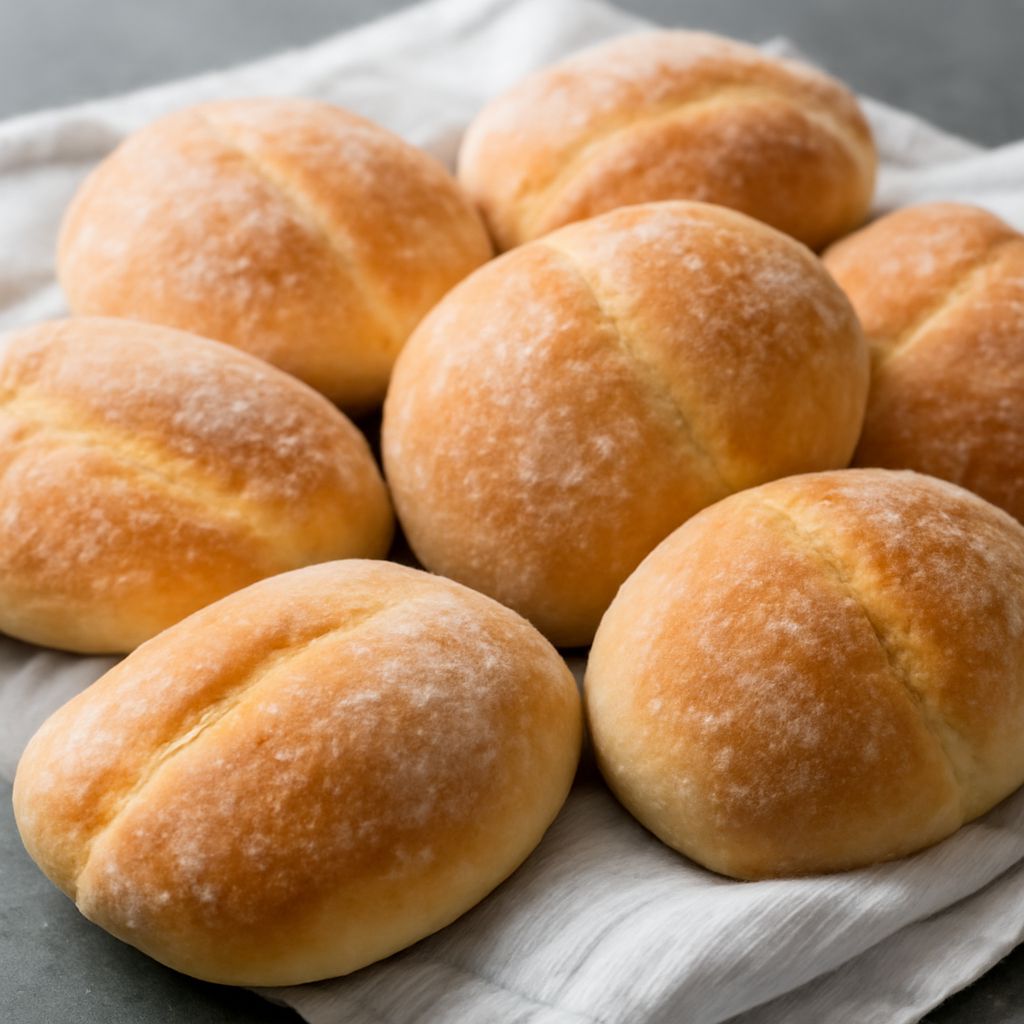
A telera roll gives you a tender, airy center and a lightly crisp crust, ready to hold a generous sandwich without turning the filling into a balancing act. Bake a batch for lunch or a casual celebration, and guests can assemble their own tortas at the table.
This Mexican sandwich bread has a distinctive oval shape and two long grooves across its top. The dough below uses vegetable oil and sugar, so the bread itself is vegan. Allow roughly two and a half hours, including rising and baking, and let the bread cool before slicing.
What makes this bread special?
Telera is a Mexican bread often used for tortas: split sandwiches filled with all manner of savory things. The oval is fairly flat, with three raised sections divided by two parallel indentations. Inside, look for a soft crumb with a little chew; outside, expect a thin, golden crust. King Arthur Baking describes the bread’s soft interior and crisp exterior, along with traditional torta fillings.
A telera bun makes a splendid base for mashed avocado, seasoned beans, lettuce, tomato, and pickled jalapeños. Spread the beans right to the edges, add the vegetables, and serve extra pickles on the side. For a party, set out the components separately so guests can build their own sandwiches just before eating.
Telera rolls: ingredients for six
This recipe is adapted from Rick Bayless’s method, using vegetable oil for the fat. For the flour conversion, see the King Arthur ingredient weight chart. A scale gives you the most consistent dough; if measuring flour in cups, spoon it into the cup and level it gently rather than packing it down.
- 3 1/2 cups (420 g) all-purpose flour, plus a little for shaping
- 1 cup plus 4 tablespoons and 1 teaspoon (about 301 g) lukewarm water
- 2 1/4 teaspoons (7 g) instant or active dry yeast
- 2 tablespoons (25 g) sugar
- 2 tablespoons (25 g) neutral vegetable oil, plus a little for the bowl
- 2 teaspoons (about 12 g) fine table salt
The flour, water, yeast, oil, and salt are plant-based. Choose a sugar suitable for your own vegan requirements. Commercial versions and other recipes may contain lard, butter, honey, milk, or an egg glaze, so check the ingredient list or ask the baker if you are buying bread for vegan guests.
Mix and give the dough time to rise
- Stir the yeast, lukewarm water, and sugar together in a large bowl. Add the flour, oil, and salt, then mix until no dry flour remains. The dough should be soft and a little tacky.
- Knead on a lightly floured surface for about 10 minutes, or use a stand mixer with a dough hook for about 8 minutes. It is ready when smooth and elastic. If it sticks badly, dust the surface sparingly; a heavy addition of flour can make the finished bread dense.
- Lightly oil the bowl and turn the dough in it to coat. Cover and leave in a warm place until doubled, about 1 hour. A cooler room can take longer. Judge by the expanded dough rather than the clock alone.
The first rise develops the airy structure you want in telera rolls. The finished sandwich rolls should feel light after baking. Give the dough enough room in the bowl to expand, and keep it covered so the surface stays supple. If using older yeast, you can first leave it with the water and sugar for a few minutes and look for bubbles before adding the remaining ingredients.
Shape the signature grooves
Gently press the risen dough down and divide it into six equal pieces. Round each piece into a ball, dust lightly with flour, and cover for 15 minutes. This rest makes each piece easier to flatten without springing back.
Pat each ball into an oval about 5 inches long and 3 inches wide. Arrange the pieces a couple of inches apart on a parchment-lined baking sheet. Flour a chopstick or the handle of a thin wooden spoon and press two parallel grooves lengthwise into each oval, nearly through the dough without cutting it apart. Those deep lines help the familiar three-part shape remain visible as the bread rises.
Dust the tops lightly with flour and cover with a towel. Let them rise until nearly doubled, around 30 minutes. Meanwhile, heat the oven to 400°F. When ready, a piece should look noticeably puffy; if your kitchen is cool, give it a little more time.
Bake, serve, and store
Bake for 18 to 20 minutes, until the tops are golden brown. Move the bread to a rack and let it cool completely before slicing horizontally. Waiting gives the crumb time to set and makes it easier to fill neatly.
If you are buying a telera roll instead, choose one that feels light for its size, with a soft interior and a crust that yields when pressed. Ask when it was baked. For a vegan filling, check that refried beans are made without lard and offer a plant-based spread alongside the vegetables.
Keep cooled bread in a sealed bag at room temperature for a day or two. For longer storage, wrap each piece well and freeze in a freezer bag. Thaw at room temperature; warm briefly in the oven if you want to freshen the crust. Slice only what you need, as exposed surfaces dry more quickly.
If the crumb turns dense
A heavy interior with few air pockets often means the dough needed more rising time, or that too much flour was worked in. Next time, weigh the flour, add only enough dusting flour to handle the dough, and wait for each rise to reach the visual cues above. If the first rise barely moves, check that the yeast is fresh and the water was lukewarm, then start again with active yeast. Toast a dense batch and serve it with a generous spread of beans or avocado: it can still make a satisfying lunch.