The perfect nightstand looks less perfect when there is nowhere to put it. Before collecting ideas for your room, look at where the bed, door, and storage actually fit. A thoughtful bedroom layout can make space for the things you use every day, while color, bedding, and lighting give the room a look that feels like yours.
Bedroom Design Starts With the Walkway
Place the bed first, then test the route from the door to each side of it and to the closet. Open drawers and doors all the way. If a nightstand blocks a drawer, a narrow wall shelf or a small stool may hold your book and glasses without claiming the whole aisle. The floor does not need another obstacle course before breakfast.
Measure the spaces that remain before buying furniture. Mark the footprint of a proposed dresser with painter’s tape and walk around it. Leave enough room to sit on the bed, change the sheets, and reach the things you store. If a full-size piece makes the room awkward, try a shallower cabinet or move storage to a different wall.
Good bedroom design and bedroom decorating ideas account for what is already in place. A solid dresser can stay even if its finish is not your favorite. Repeat its wood tone in a frame or tray, and it begins to look intentional. Choose textiles that work with the bed frame too.
Pick a Palette With a Job for Each Color
Choose a main color for the largest surfaces, a supporting color for bedding or curtains, and one accent for smaller details. The main color might come from an existing wall or rug. The accent gives the eye somewhere to land.
Test samples next to the items they will meet. A warm white wall may look creamy beside a cool gray blanket, while a muted green can change character between daylight and lamplight. Place a fabric swatch near the bed and look at it at different times of day. That small pause is cheaper than discovering the new coverlet has been arguing with the curtains all along.
These room ideas work best when the palette has a little breathing space. If the bedspread is patterned, let the wall and larger furniture stay quieter. If the walls are rich in color, a plain duvet can give them room to shine. A shared tone or repeated material can hold the scheme together.
Three Directions to Try
Each of these bedroom decoration ideas combines a layout, a palette, and a focal point. Use the version that suits the room you have, then adjust the pieces to fit your own storage and light.
Warm and Natural
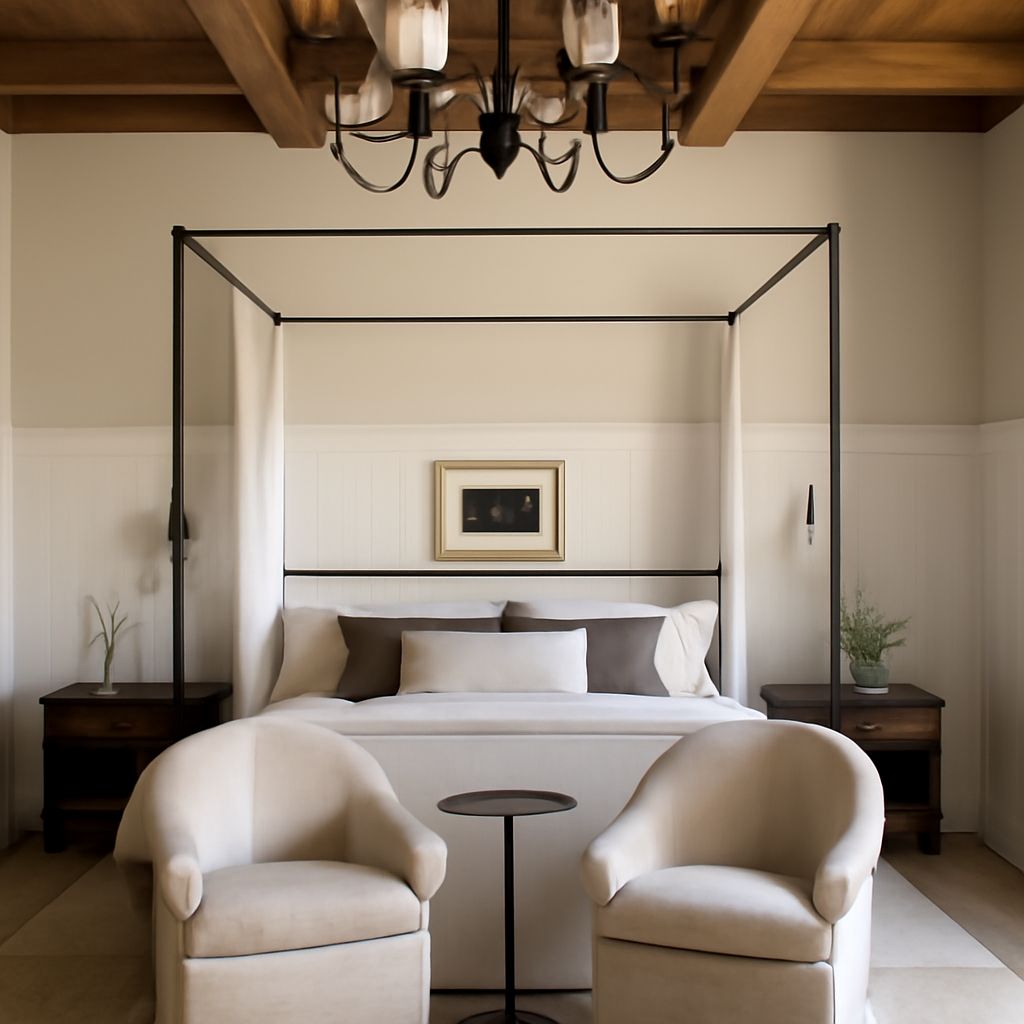
Pair creamy walls with oatmeal bedding, a muted olive throw, and a wood nightstand. Let a woven wall hanging or a framed landscape be the main accent above the bed. Choose cotton or linen-look fabrics with different textures so the neutral colors do not blur into one flat surface.
Keep the furniture arrangement simple: the bed on the longest practical wall, a reading light within reach, and a basket for the extra blanket. If the room is narrow, use a slim shelf beside the bed instead of a deep table. A warm-colored lamp shade can soften the evening scene without adding another pattern.
Airy and Coastal
Try soft white bedding, pale blue accents, and a sandy beige rug. A single large photograph or print can bring in a deeper blue. Rather than adding every shell in reach, repeat the colors in a pillow and a small object on the dresser. The room theme will read through the palette without turning the nightstand into a souvenir shop.
Sheer curtains can keep the window visually light; add a separate layer if more privacy or darkness is needed. Place the lamp where its switch is easy to reach from bed. If a dresser sits under the window, make sure its top does not obstruct the curtain or make the window difficult to use.
Moody and Collected
Use a deep blue or charcoal accent wall, off-white bedding, and one warm color such as rust in a cushion or throw. A group of framed pictures can become the focal point, but arrange them together before adding smaller ornaments elsewhere. A dark wall is already doing some of the decorating work.
Reuse an existing dresser and lamp, perhaps tying them together with frames in a similar finish. Add a lighter bedside surface or tray so everyday items remain easy to find. These ideas for bedroom decor can feel layered without filling every corner; leave a clear landing spot for the things that arrive with you at the end of the day.
Make the Light and Storage Part of the Scheme
A ceiling fixture can illuminate the whole room, but a bedside lamp or wall-mounted reading light puts light where a book actually is. Try the lamp in the evening from a seated position. If its bulb shines directly into your eyes or its switch hides behind the bed, change the shade, position, or lamp before treating the arrangement as finished.
When you decorate a bedroom, give daily objects a home. Other ideas for the room include a small tray for glasses and a watch; a drawer or lidded box can hold chargers. Under-bed storage may help with spare linens if it can be reached without moving the furniture. Decorated bedrooms in photographs rarely show the charging cable, but real rooms need a plan for it.
Choose one wall accent to anchor the scheme, then leave some open space around it. Artwork, a textile, or a painted area can all work; the choice should fit the wall and the furniture below. Check that it sits comfortably in the view from the doorway as well as from the bed.
Try the Room Before You Commit
Walk the route to the closet, open the drawers, sit on both sides of the bed, and switch on the evening light. Adjust anything that catches a foot or puts a lamp out of reach. Then choose one existing item—a dresser, a favorite print, or a bedspread—as your anchor, and build a trial palette of three colors around it.