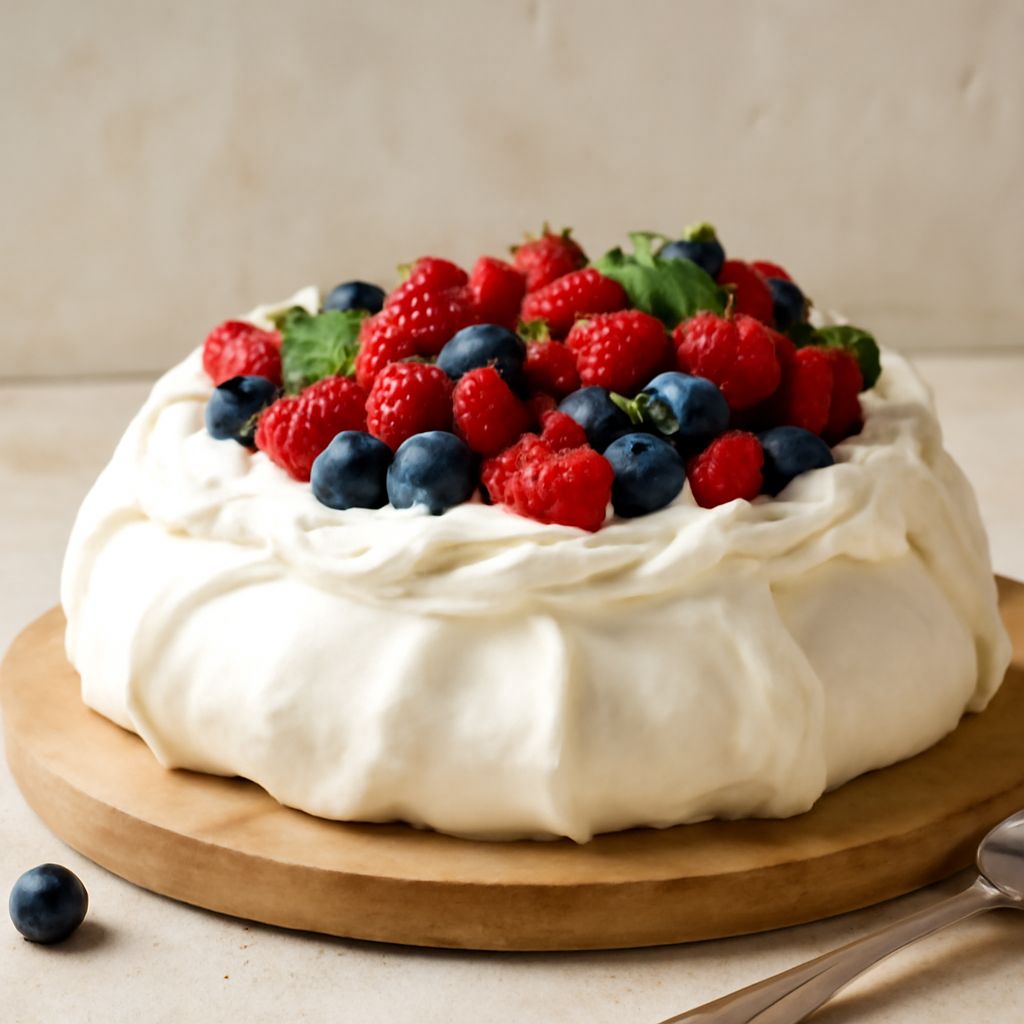
A dinner party is tomorrow, and you want a dessert that looks festive without asking for last-minute baking. If you are wondering what a pavlova is, picture a cloudlike shell with fruit on top. This plant-based pavlova recipe gives you a make-ahead centerpiece and a little theater at the table.
Pavlova recipes for a plant-based celebration
So, what is pavlova? It is a meringue-based dessert with a delicate, crisp exterior and a softer center, usually finished with cream and fruit. Many pavlova recipes use whipped egg whites; this one uses aquafaba, the liquid from canned chickpeas. It whips into a foam that can hold sugar and dry into a light shell. That foam is what makes pavlova possible without eggs. The center may be softer and less marshmallow-like than an egg-white version, and humidity and oven temperatures can affect the texture.
Knowing what pavlova is helps you plan the rest of the menu: it is sweet and airy, so tart fruit and a tangy topping are welcome partners. Serve it after a rich meal or at a celebration. Expect a few cracks when you slice it; they are part of its charm.
Ingredients and equipment
This easy pavlova recipe makes one roughly 6-inch shell, enough for about six modest servings. Allow around 30 minutes of active preparation, two hours for baking, and time for the shell to cool completely. The method is adapted from Good Food’s aquafaba pavlova, with a berry topping.
- Liquid drained from one 14- to 15-ounce can of chickpeas, about 1/2 cup; save the chickpeas for another meal
- 1 teaspoon cream of tartar
- 1 1/3 cups superfine sugar (260 grams), preferably weighed
- About 1 1/2 cups thick dairy-free coconut yogurt
- 2 cups fresh mixed berries, washed and thoroughly dried
- 1 tablespoon powdered sugar, optional, for the fruit
You will need an electric hand mixer or stand mixer, a large clean bowl, a baking sheet, and parchment paper. A scale is especially helpful for the sugar. For superfine sugar, choose a product labeled as such; it dissolves more readily than coarse sugar. Use sugar labeled vegan if that matters to your guests.
Aquafaba varies from can to can, so use the liquid from one standard can as the source method specifies. It should be free of oil or sauce. A little salt in the can is fine, but avoid strongly seasoned chickpeas. Have the bowl and beaters clean and dry: grease can interfere with the foam.
How to make the shell
Here is how to make pavlova with enough time for the foam to build and the shell to dry gently. Set out your ingredients before switching on the mixer.
- Prepare the oven and pan. Heat the oven to 285°F, using conventional heat, and place a rack in the lower part of the oven. Line a large baking sheet with parchment. Trace a 6-inch circle on the reverse side as a guide, keeping the pencil away from the food.
- Whip the aquafaba. Pour the drained liquid into the bowl and add the cream of tartar. Beat with the whisk attachment or electric beaters until the mixture is white, has roughly tripled in volume, and forms stiff peaks when the whisk is lifted. This can take 15 to 18 minutes. Soft peaks curl over; stiff peaks stand up.
- Add the sugar slowly. Keep beating and add the superfine sugar one tablespoon at a time, mixing well between additions. Continue until it is incorporated and the foam is thick and glossy. Rub a little between clean fingertips: if it feels very gritty, keep beating to help the sugar dissolve.
- Shape. Dab a little foam under the parchment corners to hold it in place. Spoon the rest into the marked circle, making a shallow hollow in the middle and slightly higher sides to hold the topping. It may spread during baking, so leave room around it.
- Bake and cool. Bake on the lower rack for two hours. The shell can still feel slightly soft when it comes out; it firms as it cools. Leave it on the tray until completely cool, then gently check that it releases from the parchment. Handle it from underneath with a broad spatula rather than gripping its fragile edges.
Making a pavlova takes patience, especially during whipping. Watch the foam rather than the clock alone: mixers differ, and adding sugar before the liquid reaches stiff peaks can leave you with a mixture that spreads. Low, steady heat gives the exterior time to dry. An oven thermometer is useful if your oven runs hot or fluctuates.
Finish just before serving
While the shell cools, slice any large berries and leave smaller ones whole. If the fruit is very tart, toss it with the optional powdered sugar shortly before serving. Keep the coconut yogurt refrigerated until needed. Choose a thick variety so it sits in the hollow rather than running over the sides.
Transfer the cooled shell to a flat serving plate. Spoon the yogurt into the center, then scatter the dry fruit over it. Bring it to the table promptly: moisture from the topping gradually softens the crisp surface. Use a large spoon if neat slices prove elusive.
For a party, bake the shell up to two days ahead. Once completely cool, store it well wrapped or in an airtight container at room temperature. Keep the yogurt and fruit separate and assemble at the last moment. If the room is humid, the shell may become sticky sooner, so give yourself a little flexibility in the schedule.
Understanding what a pavlova is made from also makes variations easier: keep the shell method steady, then change the fruit with the season. Raspberries and sliced strawberries give a bright contrast; blueberries and blackberries add deeper color. For extra crunch, scatter a small handful of chopped pistachios over the top, provided your guests can eat nuts.
If the foam spreads into a flat puddle before baking, next time beat the aquafaba to firm, upright peaks before adding the sugar, then add it slowly while the mixer runs.