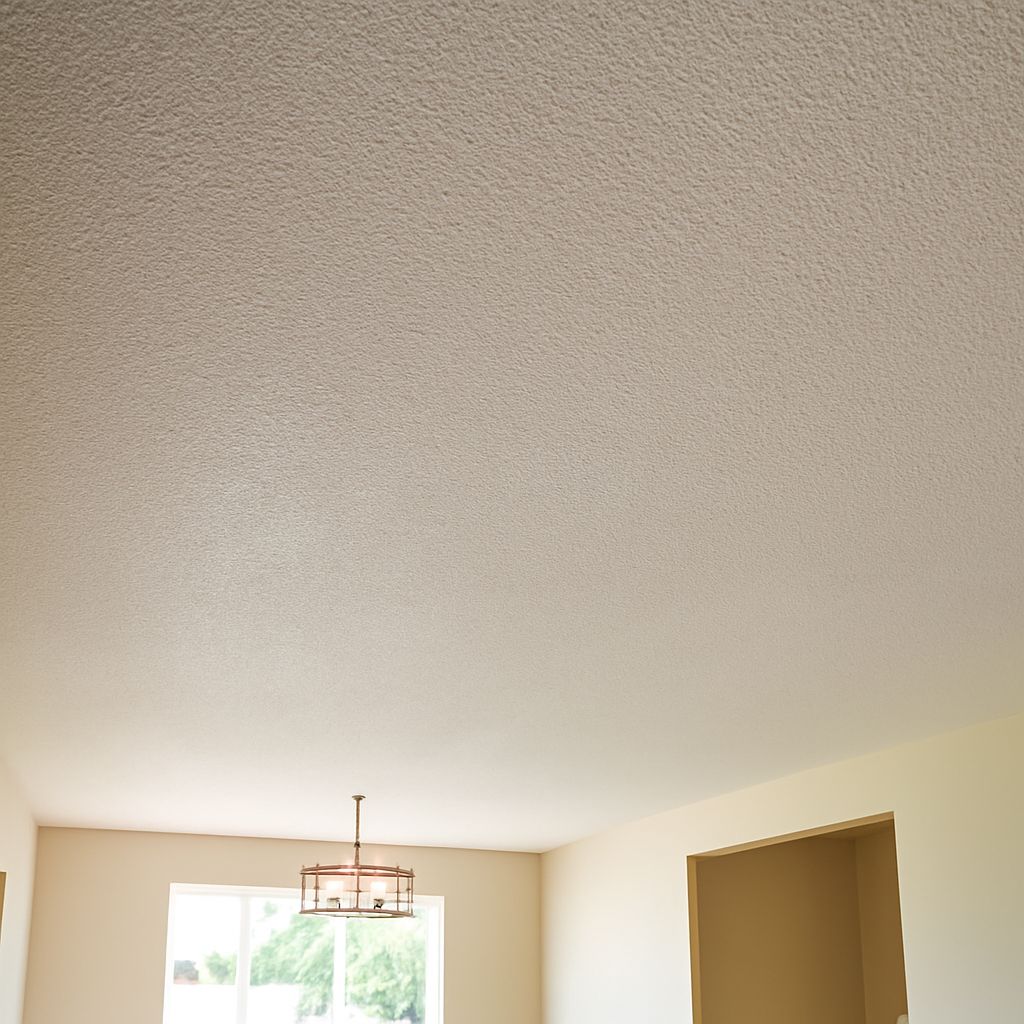
A little texture overhead can give a plain room depth without asking you to replace every piece of furniture. Compare the different types of ceiling texture in the light you actually have, and you can choose a finish that feels quiet or makes more of a statement.
Different textured ceiling styles also have different practical demands. Some are relatively easy to dust; others catch shadows, collect cobwebs, or make a future patch more noticeable. That ceiling will be with you long after the paint samples have left the kitchen counter.
Types of Textured Ceilings at a Glance
These ceiling texture types range from nearly flat to boldly patterned. The scale of the marks and the angle of the light can change how prominent each one looks.
| Finish | Appearance | Consider it for |
|---|---|---|
| Smooth | Flat and even | A clean, understated look |
| Orange peel | Fine, softly pebbled surface | Subtle interest in small or large rooms |
| Knockdown | Flattened, irregular patches | Gentle visual movement in living areas |
| Skip trowel | Sweeping, uneven raised marks | A more handmade appearance |
| Swirl | Repeated arcs or circles | A decorative focal point in a larger room |
| Stomp brush | Repeated impressions with radiating marks | A pronounced, tactile pattern |
| Popcorn | Coarse, bumpy coating | An existing ceiling whose condition needs assessment |
Smooth is technically a lack of texture, but it is a helpful baseline when comparing the other finishes. It also shows how much of the visual effect comes from light rather than from color alone.
Smooth and Orange Peel: Quiet Choices
A smooth ceiling gives the eye little interruption. It works well in a compact room or anywhere you want artwork and furnishings to take the lead. A smooth finish demands careful preparation: seams and imperfections can become visible when daylight or a wall-mounted light skims across the surface.
Orange peel has a fine, dimpled appearance, like its namesake fruit. It adds a little visual softness while remaining restrained enough for a bedroom or hallway. Among the types of textured ceilings, it is a practical choice when you want some surface variation without an obvious repeating pattern. The size of the spray and application technique affect the result, so ask to see a sample before the whole room is covered.
These two ceiling texture styles can reveal patch differences under strong side lighting. If a repair is likely, discuss matching the surrounding surface with your contractor before choosing the final paint.
Knockdown and Skip Trowel: Gentle Movement
Knockdown starts with sprayed or applied texture whose raised areas are flattened to create irregular islands. From across the room, the effect is usually softer than a heavily ridged pattern. It can add interest to a living room without insisting that every guest look up before sitting down.
Skip trowel uses a trowel to leave scattered, sweeping marks. The result can look more varied and handmade than knockdown. A light application brings warmth to an ordinary dining room; a heavier hand creates deeper shadows and a stronger presence. Both types of texture for ceilings depend on the applicator’s technique, so a sample board is especially helpful.
These ceiling patterns can disguise some small surface variations, but they do not repair a damaged ceiling. Fix the cause of water stains or cracks first, then prepare the surface for the finish.
Swirl and Stomp Brush: Patterns With Personality
A swirl finish uses overlapping arcs or circles made with a brush or similar tool. Broad, orderly swirls can feel decorative in a spacious room, while tight repeats create a busier surface. Stand back from a sample and imagine the pattern repeated across the full ceiling; a charming little arc has many relatives once it covers an entire room.
Stomp brush is one of the more pronounced textured ceiling finishes, made by pressing a brush into wet compound to leave repeated impressions. Depending on the brush and technique, the result may look like stars, fans, or irregular bursts. It suits a room where you want the ceiling itself to be noticed.
Of the ceiling texture ideas here, these two ask the most attention from your lighting plan. A fixture close to the surface can exaggerate ridges and cast strong shadows. View a sample beside the fixture you intend to use, including at night, before settling on the depth of the pattern.
Popcorn: Look Before You Disturb It
Popcorn has a coarse, heavily bumpy appearance. Like other coarse ceiling textures, it can catch dust and make cleaning awkward; matching a repair may also be difficult. If you have an existing popcorn ceiling and like it, check its condition before deciding whether any work is needed.
Older textured material can contain asbestos, and old paint may contain lead. Before scraping, sanding, drilling, or otherwise disturbing a suspect finish, arrange an assessment by a qualified asbestos professional. The EPA advises testing suspect material when it is damaged or a renovation will disturb it. For a home built before 1978, discuss lead-safe testing and practices with an appropriately certified professional; EPA guidance explains the relevant renovation rules. Appearance alone cannot tell you whether either hazard is present.
Compare Samples Before Committing
Ask for sample boards made with the proposed material, pattern, and paint finish. Hold each one overhead or against the ceiling and look from the doorway, the sofa, and the room’s brightest window. A texture that seems delicate in your hand may look surprisingly bold when repeated above you.
Compare the ceiling texture options at different times of day. Grazing light emphasizes relief; softer, more even light tends to reduce visible shadows. Also ask how the finish would be cleaned and how a future patch would be matched. A pattern applied by hand may be harder to reproduce exactly than a fine, consistent spray.
For a small room, smooth or fine orange peel keeps the overhead surface visually calm. In a larger room, knockdown or a light skip trowel adds subtle movement; choose swirl or stomp brush when you want a more expressive pattern. Let room size guide the scale, and let the amount of texture decide how loudly the ceiling joins the conversation.