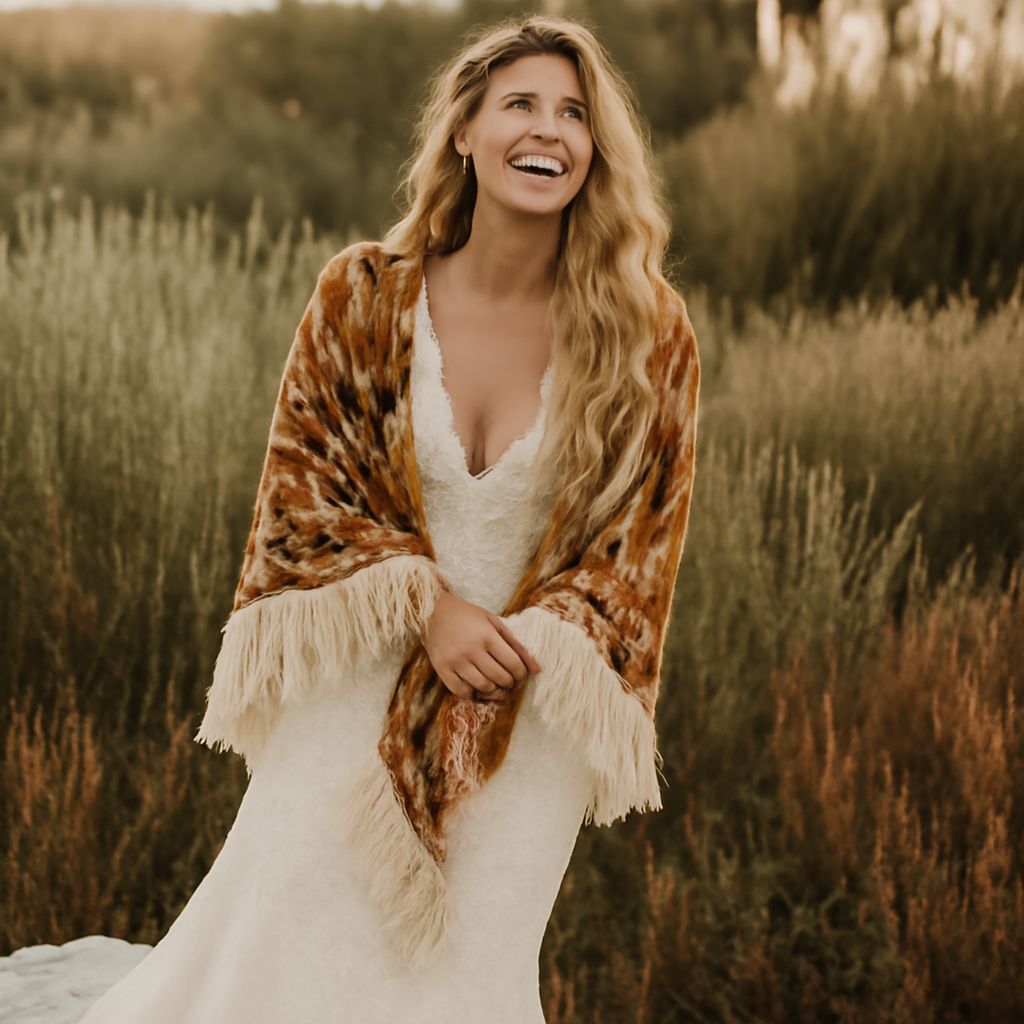
The ceremony is outside, the forecast has acquired a breeze, and your dress has no sleeves. A shawl for your wedding can keep your shoulders comfortable without hiding the gown you chose.
The best bridal layer depends on when you will wear it and its purpose. A sheer wrap can soften a neckline for the ceremony; a substantial jacket can make an evening outdoors much more pleasant. Start with that job, then choose a shape and fabric that suit the dress.
Bridal cover up options for different silhouettes
A wedding shawl is a length of fabric draped around the shoulders or arms. It can be loosely folded for a relaxed look or arranged neatly across the back. A wedding stole is similar, often longer and narrower, with ends that can hang down the front. Both are easy to remove between the ceremony and reception.
Other bridal cover ups have a more defined shape. A bolero is a short jacket that usually ends above the waist; a capelet sits over the shoulders and may fasten at the neckline. A tailored jacket offers sleeves and structure, while a cardigan gives a softer, less formal effect. Try a removable overskirt or a separate sleeve only if it solves the particular coverage problem: neither will necessarily protect your shoulders from a breeze.
Let the dress guide the outline. A narrow stole can follow the clean lines of a column gown, while a cropped jacket can show off the waist of a full skirt. With a detailed bodice, a sheer layer lets the work remain visible. A simple gown can take a textured or embellished layer, provided the two feel like parts of the same outfit.
Decide how much coverage you need
Consider the moments on your schedule, not just the photographs. Will you wear the layer for a short walk to the ceremony, throughout the vows, or for an entire outdoor dinner? Those are three rather different assignments for one piece of fabric.
- Shoulders and upper arms: Choose a wide wrap, capelet, or bolero. Raise your arms to see whether it stays where you want it.
- Arms and back: Look for sleeves or a generous wedding wrap that reaches comfortably across your back. A clasp can help hold the front closed.
- Extra warmth: Try a lined jacket or a dense knit with enough room over the dress. A thin, open-weave layer gives far less shelter from wind.
- Ceremony coverage: If your venue has a dress requirement, find out which areas need covering and choose a piece that remains in place while you sit and stand.
A bridal cover up should also work with the back of your gown. If you love its buttons or low back, decide whether you want them visible during the ceremony or are happy to reveal them later. Bring a photo of the back when shopping, along with any veil or hair accessory that might catch on the fabric.
Match the fabric to the season
For warm weather, try a light, airy cotton or linen blend, or a sheer polyester chiffon. These can provide a little coverage without adding the weight of a lined jacket. For a cool indoor venue or an evening reception, a denser cotton knit, a lined wedding wrap, or a jacket may be more comfortable. For a cold outdoor ceremony, plan a substantial coat for the journey and any long waits; a delicate layer alone may leave you shivering.
Animal-free options include cotton, linen, lyocell, and polyester. Fabric names such as satin, chiffon, and velvet describe a finish or construction, so check the fiber label: a satin may be made from polyester or silk, for example. If avoiding animal materials matters to you, look at the lining, trim, and fastenings too. Ask the seller about any component that is not listed.
The feel matters as much as the label. Hold a swatch against your neck and arms, and see how the fabric drapes when folded. A slippery material may need a discreet fastening; a textured knit can snag on beading. Check the care instructions before purchasing, especially if you want to wear the piece again.
Coordinate color, formality, and detail
Take a dress swatch shopping if you have one. Whites can look warm, cool, or almost ivory next to each other, and store lighting can make the difference hard to see. View the pieces together in daylight and under the kind of lighting planned for your venue. A deliberate contrast, such as a soft blue wrap with an ivory gown, can be lovely; it helps to repeat the color elsewhere in your outfit.
Your bridal covering should feel appropriate with the whole occasion. A smooth, draped stole fits easily into a formal evening look; a cotton cardigan can feel at home at a relaxed garden ceremony. Lace, embroidery, and sparkle can echo a detail on the gown, but leave enough quiet space for that detail to be seen. If both pieces are ornate, try them together before deciding which one gets the attention.
When comparing bridal wraps, check their dimensions as well as their appearance. A long narrow piece may look elegant hanging straight but slip off when you move. A wider piece gives more coverage, though extra fabric can bunch around a fitted bodice. Try different folds and ask someone to photograph the front, back, and sides.
Test the layer with your full outfit
Put on your shoes and, if possible, your actual dress. Walk, sit, hug someone, and lift your bouquet. Fasten the layer and remove it once without disturbing your hair. If a pin is needed, ask your alterations professional where it can go without damaging the fabric. Arrange who will hold the piece when you take it off and where it will be kept during the reception.
Shopping for wedding cover ups is easier when you know your decisive condition. For that breezy outdoor ceremony, choose a wide, secure layer in a fabric with enough substance for the forecast, then test it over your gown. If the ceremony is brief and the reception is warm, pick a piece you can remove easily and enjoy the dress on its own afterward.


