You have a bowl of fruit ready for a celebration pie, and now you need a crust that will hold it without turning tough. This recipe for pie pastry uses cold fat, flour, and ice water to make two tender crusts. With a little attention to texture and chilling, it may become your favorite pie dough recipe yet.
Pie pastry recipe: make enough for two crusts
In any pastry crust recipe, small pieces of cold butter help create distinct layers: as the pie bakes, moisture creates steam and the fat leaves space between thin sheets of pastry. A light hand matters, too. Add only enough water for the dough to hold together, then let it rest before rolling.
This pie pastry recipe makes a double-crust 9-inch pie or two single shells. Use unsalted dairy butter, or choose a firm, stick-style plant-based butter for a vegan pie. Soft spreads in tubs contain varying amounts of water and can make the dough difficult to handle. Keep whichever fat you choose cold until it goes into the flour.
Ingredients
- 2 1/2 cups (about 300 grams) all-purpose flour, plus more for rolling
- 1 teaspoon fine salt
- 1 tablespoon sugar, optional for a sweet pie
- 1 cup (2 sticks or 8 ounces) cold unsalted butter or firm plant-based butter, cut into small cubes
- 6 to 8 tablespoons ice water, plus a little more if needed
Mix and chill
- Whisk the flour, salt, and optional sugar together in a large bowl. Add the cold butter and toss the cubes in the flour.
- Rub the butter into the flour with your fingertips, or use a pastry cutter, until you have a mixture of coarse crumbs and some pea-size pieces. Work briskly so the fat stays cool. Those visible pieces will help make an easy flaky pie crust.
- Sprinkle in 6 tablespoons of ice water and toss with a fork. Squeeze a handful: it should hold together without feeling wet or sticky. If it falls apart, add water 1 tablespoon at a time and toss again. A few dry-looking crumbs are fine if they join the dough when pressed.
- Divide the mixture in two and gently press each half into a disk. Do not knead it like bread. Wrap the disks and refrigerate for at least 1 hour, or up to 2 days. Chilling firms the fat and gives the flour time to absorb the water.
With this piecrust recipe, squeeze the dough to test it. If the butter begins to smear, chill the bowl for 10 minutes.
Roll and fit the dough
Take one disk from the refrigerator and let it sit for 5 to 10 minutes if it is too firm to roll. Lightly flour the counter, dough, and rolling pin. Roll from the center outward, turning the disk a quarter turn every few strokes and adding a little flour only if it sticks. For a 9-inch pan, aim for a circle about 12 inches across and roughly 1/8 inch thick.
Fold the pastry loosely over the rolling pin, lift it into the pan, and ease it into the corners without stretching. Trim the overhang to about 1 inch. For a single shell, fold the edge under and crimp with your fingers or a fork. Chill the lined pan for 20 to 30 minutes before baking; this helps the pastry hold its shape.
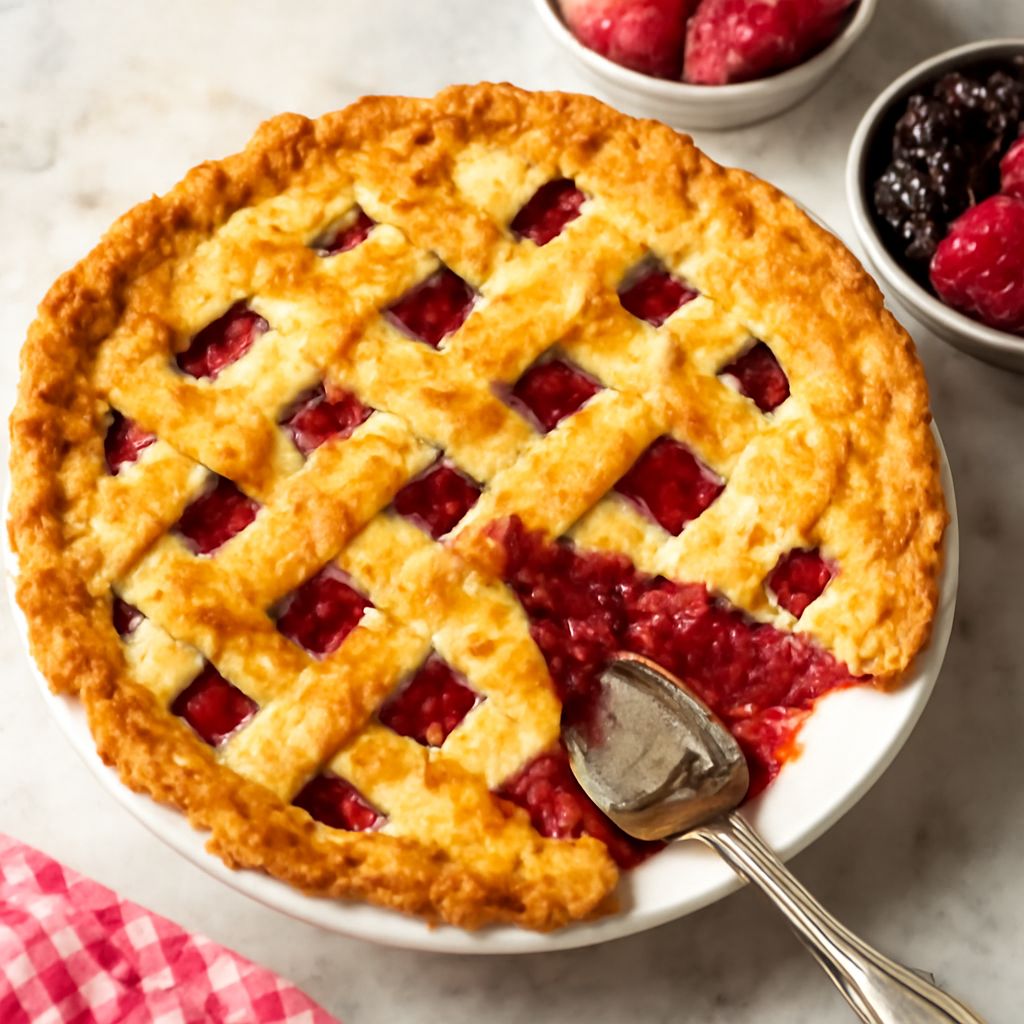
If you need a pie top crust, roll the second disk to a similar thickness. For a fruit pie, add the prepared filling to the chilled bottom shell, lay the top over it, and trim and seal the edges. Cut several small vents so steam can escape. You can use strips for a lattice, leaving openings between them. Refrigerate the assembled pie for about 20 minutes while the oven heats.
Bake with a filling or bake the shell first
For a typical double-crust fruit pie, set the pan on a rimmed baking sheet to catch drips. Bake at 425°F for 20 minutes, then reduce the oven to 375°F and continue for about 35 to 45 minutes, until the crust is golden and the filling bubbles through the vents. If the edges brown too quickly, cover them loosely with foil. Your filling recipe may call for a different time, especially for custard or precooked filling, so use its directions for doneness.
For a filling that will not be baked, blind-bake the shell completely. Line the chilled dough with parchment and fill it to the rim with pie weights or dried beans. Bake at 400°F for about 20 to 25 minutes, until the edges begin to color. Carefully remove the parchment and weights, prick the base with a fork, and bake for another 10 to 15 minutes, until the bottom is golden and dry. Cool completely before adding the filling. For a filling that will bake again, follow its directions for a partially baked shell instead.
Let a fruit pie cool before slicing so its juices thicken. Refrigerate cream and custard fillings. For the best pie crust ever under a no-bake filling, bake the shell until its base is golden and dry before filling it.
Make the texture work for you
For your best ever pie crust recipe, keep pea-size pieces of cold fat in the dough and add water only until a squeezed handful holds together. Butter gives a familiar flavor; firm plant-based sticks can make a lovely dairy-free pastry, although brands vary in moisture and salt. If your vegan butter is salted, consider reducing the added salt slightly.
For the best pie crust recipe ever, watch your dough: flour absorbs moisture differently, and a hot room softens fat. Freeze an unused, well-wrapped disk for up to 2 months; thaw overnight in the refrigerator before rolling.
If the dough cracks badly at the edges as you roll, it may be too cold or too dry. Let it sit for a few minutes, then press small cracks together; if it still crumbles, sprinkle a few drops of ice water onto the dry area and gently work them in. If the dough sticks and feels greasy, chill it until firm before rolling again.